Places People Are Choosing to Start a Family

Starting a family often changes what people need from where they live. Priorities tend to shift toward stability, routine, and environments that make everyday life feel manageable. Things like access to daily necessities, a sense of community, and a pace that supports long-term living start to matter more than constant change or excitement.
Where you live starts to matter differently over time. For those considering places to raise a family, The Safest place to raise a family, community, and everyday life take the lead.
The places people choose at this stage are usually ones that feel reliable and supportive over time. Rather than chasing growth or trends, many families look for locations that make it easier to settle in, build routines, and focus on the life they’re creating.
Safety often shows up in quieter ways, like reliable neighborhoods, consistent schools, and environments designed for long-term family life.
#1 Plano, TX
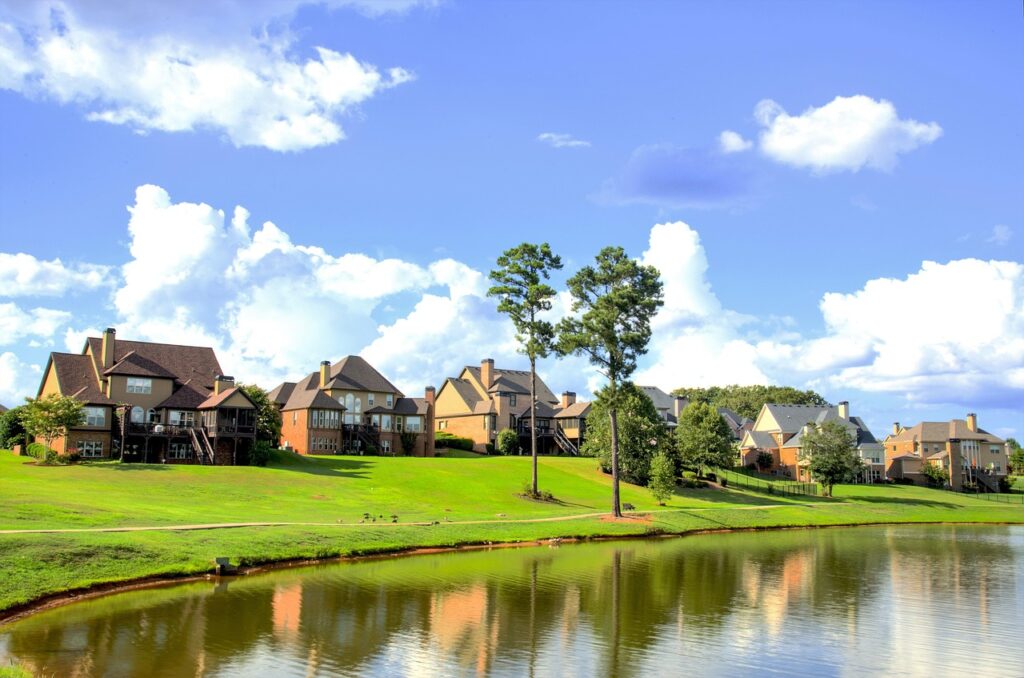
Plano is often chosen by families looking for structure and predictability. Established neighborhoods, access to parks, and a strong local infrastructure make daily routines feel manageable. The city offers the benefits of a larger metro while maintaining an environment designed around long-term living. Public safety transparency and community policing resources are maintained through the official Plano Police Department, giving residents access to reporting tools and neighborhood safety programs.
Education plays a major role in Plano’s appeal. The city is served by Plano Independent School District, one of the largest districts in Texas, known for consistently strong academic performance and a wide range of programs. Families often point to the availability of advanced coursework, extracurricular activities, and specialized programs as reasons the area feels supportive for children at different stages of development.
Beyond schools, Plano offers a family-oriented environment with access to parks, recreation centers, and community programming. The city maintains an extensive trail system, youth sports leagues, and public spaces designed for everyday use rather than tourism. For many families, Plano stands out because it supports both structure and flexibility, making it easier to balance school, activities, and home life without constant adjustment.
#2 Maple Grove, MN
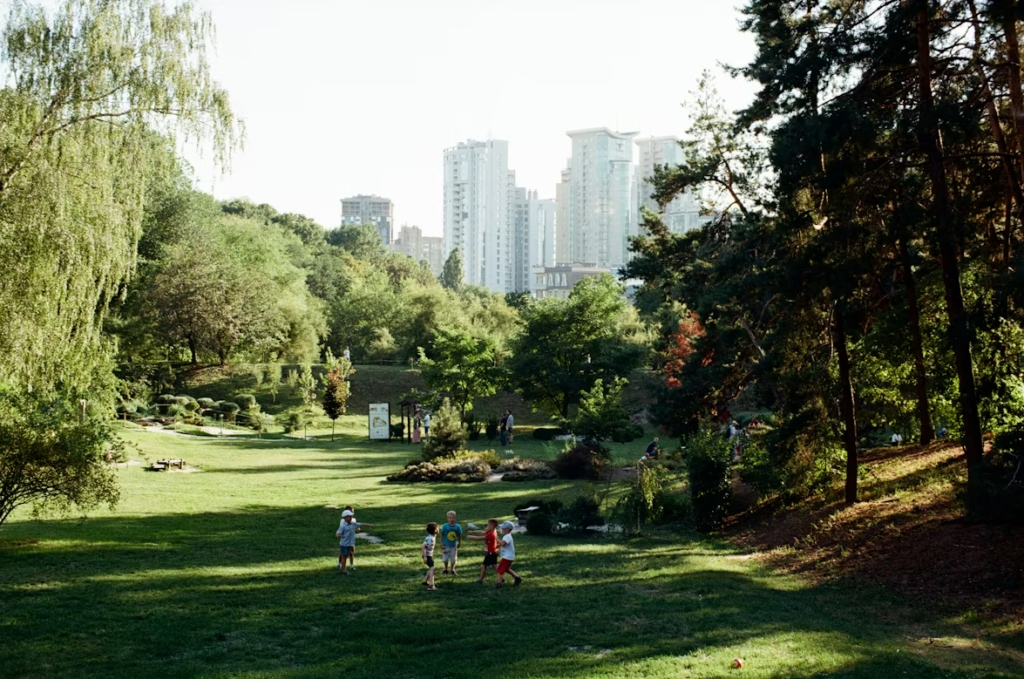
Maple Grove is often chosen by families who value structure, planning, and a strong sense of community. With a population of roughly 70,000 residents, it feels large enough to offer resources and amenities while still maintaining a suburban, family-oriented atmosphere. The city consistently ranks among the more desirable suburbs in the Minneapolis–St. Paul area due to its balance of residential neighborhoods and everyday convenience. According to U.S. Census Bureau data, Maple Grove has experienced steady population growth and maintains a stable residential base that supports long-term planning. The city consistently ranks among the more desirable suburbs in the Minneapolis–St. Paul area due to its balance of residential neighborhoods and everyday convenience.
The city’s development history plays a role in its appeal. Maple Grove experienced much of its growth in the late 20th century, which led to thoughtfully planned neighborhoods, modern schools, and extensive public infrastructure. This intentional growth is reflected in its wide roadways, trail systems, and community spaces, all designed to support long-term residents rather than short-term expansion.
Education and recreation are central to daily life in Maple Grove. Families benefit from access to Osseo Area Schools, along with numerous parks, sports complexes, and year-round youth programs. With lakes, trails, and community events woven into the city’s layout, Maple Grove supports a lifestyle where school, activities, and home life feel connected and manageable, which is often what families prioritize when choosing a place to settle.
Place #3 Westfield, IN

Westfield is often chosen by families looking for a slower pace without giving up structure or opportunity. With a population of around 50,000, it retains a town-like feel while benefiting from proximity to the Indianapolis metro. Daily life tends to revolve around neighborhoods, schools, and local amenities rather than constant growth or congestion, which appeals to families planning for long-term stability.
One feature that sets Westfield apart is its emphasis on community design and shared spaces. The city has invested heavily in public trails, parks, and gathering areas, including an extensive trail network that connects neighborhoods to schools, sports facilities, and downtown areas. This makes it easier for families to build routines around outdoor activity, youth sports, and time together without relying heavily on driving.
Education and family life are closely integrated into the town’s layout, supported by Westfield Washington Schools, which offers recreational programs and a high graduation rate, and by community events designed to be accessible and central to daily routines. Rather than feeling transitional or fast-changing, Westfield often feels settled and intentional, which is why families who value predictability, connection, and a strong sense of place are drawn to it when deciding where to put down roots.
#4 Marietta, GA
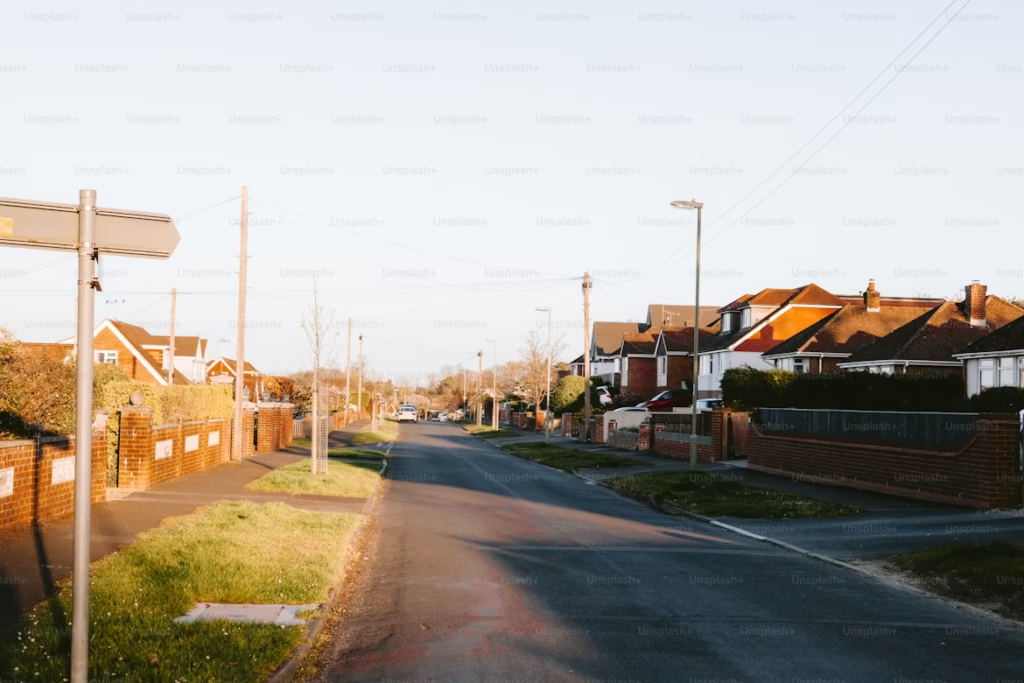
Marietta is often chosen by families who want a sense of community while staying connected to a larger metro. Located just outside Atlanta, the city offers established neighborhoods and a pace of life that feels more manageable than the urban core. With a population of around 60,000, Marietta feels large enough to support amenities and schools while still maintaining a local, family-oriented atmosphere.
What makes Marietta stand out is its strong town-center identity. The historic downtown square serves as a focal point for community life, hosting local events, markets, and family-friendly activities throughout the year. This creates a setting where families naturally gather and routines form around shared spaces rather than spread-out development.
Education and everyday livability are central to Marietta’s appeal, supported by active community engagement and consistent public safety reporting. According to recent data published by the Marietta Police Department, crime statistics are tracked and publicly available, giving families transparency into long-term safety trends. Annual crime breakdowns by population further help residents evaluate stability over time.
Place #5 Fort Collins,CO

Fort Collins is often chosen by families looking for a balanced lifestyle that blends structure, community, and access to the outdoors. With a population of just over 170,000, the city feels large enough to offer strong schools, services, and amenities, while still maintaining a pace that feels manageable for day-to-day family life. Neighborhoods are well established, and routines tend to form easily around schools, parks, and local spaces.
Education plays a central role in Fort Collins’ appeal. The area is served by Poudre School District, which consistently ranks well within Colorado and offers a wide range of academic, athletic, and extracurricular programs. Families often appreciate how schools, recreation, and neighborhoods are closely connected, reducing the friction of daily schedules and activities.
What sets Fort Collins apart is how seamlessly outdoor access fits into everyday life. Trails, parks, and open spaces are built into the city rather than sitting on the outskirts, making it easy for families to spend time outside without planning around travel. Combined with a strong sense of community and a city layout that prioritizes livability over growth at all costs, Fort Collins appeals to families who want a place that supports long-term routines and a well-rounded lifestyle.
The Takeaway
For many Families, safety is less about headlines and more about predictability, trust, and environments built to support everyday life.
Starting a family often reshapes what people need from where they live. The great places to raise a family in the US places tend to support routine, stability, and a pace of life that makes everyday responsibilities easier to manage. Access to schools, community spaces, and environments designed for long-term living usually matters more than size or trendiness.
Whether it’s a structured suburb, a mid-sized city, or a community built around balance and livability, the right place is one that allows families to settle in confidently and focus on building their lives rather than constantly reassessing their surroundings.